 Flower Mound
Home › Roof & Wall Work › Fiber Cement Siding
Fiber Cement Siding in Flower Mound
When old boards on a gable or chimney box are replaced, fiber cement is often what goes back. Here is what the material is and how it should be put up.
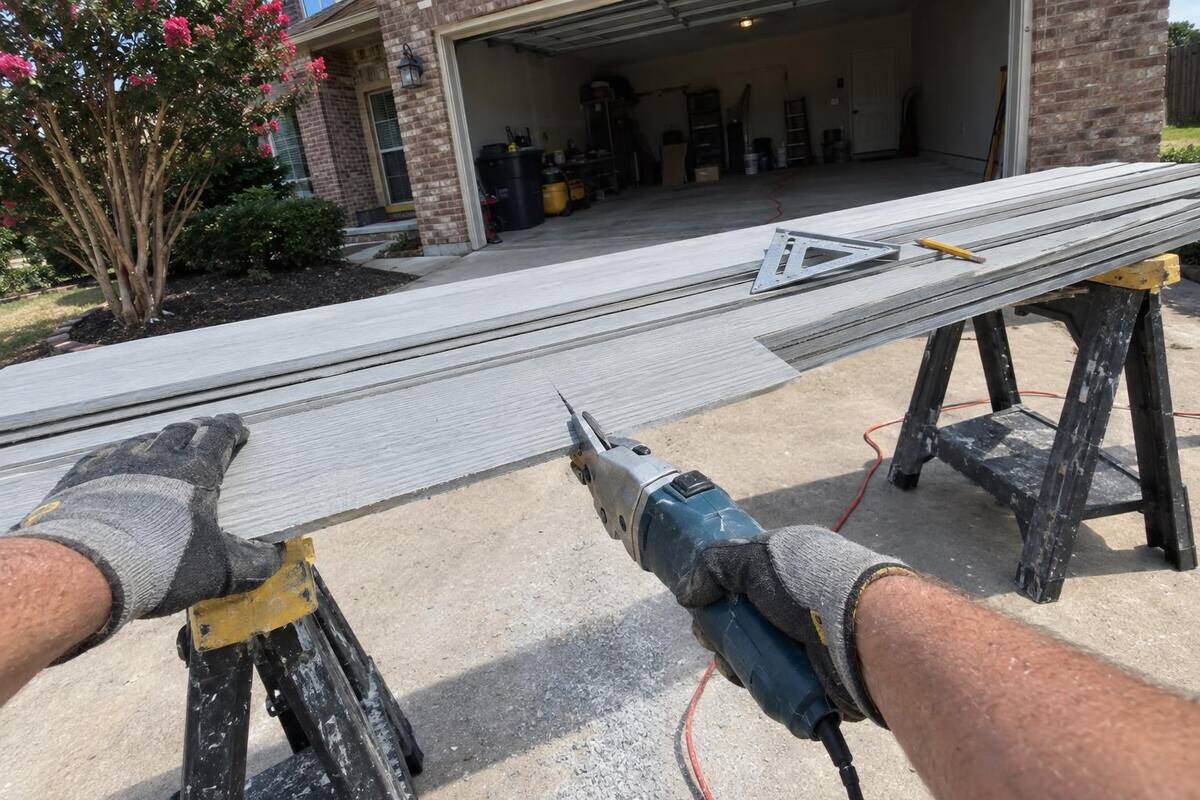
In Brief
Fiber cement is a board made of cement, sand and cellulose fiber. It does not rot and it holds paint well.
It is heavy, brittle until fastened, and unforgiving of shortcuts at joints, cut edges and clearances.
It comes as lap boards, vertical panels, shingle-look panels and trim, primed or factory-painted.
Why Contractors Reach for It
For replacing swollen or split boards on a thirty-year-old house it has clear advantages: it is not food for insects, it does not swell at the edges the way old composite wood does, it is noncombustible, and paint lasts on it. It can be made to match the board height of most older lap siding, which matters when only some walls are being redone.
It is not indestructible. A hard blow can crack or chip it, and large hail has been known to do so. Compared with thin metal or vinyl it tends to come through hail well, but no source read for this site gives a tested figure, so none is claimed.
Installation Details That Decide How Long It Lasts
- Clearance above a roof. Boards stop short of the shingles, commonly by a couple of inches, with flashing behind. Fiber cement that sits in water at a roofline will eventually delaminate at the edge.
- Clearance above brick ledges, decks and the ground. The same idea in smaller measure. The manufacturer's instructions give the numbers.
- Cut edges. Every field cut is sealed with primer or paint before the board goes up.
- Joints. Butt joints land on framing, with a piece of flashing behind or a gap caulked, depending on the product and finish.
- Fastening. Nailed into studs at the spacing the maker specifies, with nails set flush, not overdriven.
- Dust. Cutting releases silica dust. Crews use shears or saws with dust collection and cut outdoors, away from your open windows.
Ask the contractor which manufacturer's instructions they follow and whether the product warranty depends on it. It does.
Primed or Factory-Finished
| Primed, painted on site | Factory-finished | |
|---|---|---|
| Color | Anything, matched to the rest of the house | From the maker's palette |
| Best for | Partial jobs where new boards must match old paint | Whole walls or whole houses |
| Touch-up | Ordinary exterior paint | Maker's touch-up kit; cut edges still need sealing |
| Repaint cycle | Depends on the paint used | Finish warranties are typically longer; read the terms |
On the Quote
- Product, thickness, profile and exposure, which is the height of board showing.
- Weather barrier and flashing included, by name.
- Trim boards: fiber cement as well, or wood?
- Paint: how many coats, which paint, and whether caulk joints are painted.
- Disposal of the old siding.
Questions on This Page
Can fiber cement go over old siding?
It is normally installed over sheathing and a weather barrier after the old cladding is removed, which also lets the wall be inspected.
Is it the same as stucco or cement board?
No. It is a factory-made siding board. Tile backer board is a different product and is not used as exterior cladding.
Does it need repainting?
Yes, eventually, like any painted surface. It generally holds paint longer than wood because it moves less with moisture.
Ask About Fiber Cement for Your Walls
Say whether it is a partial replacement that has to match, or a whole wall.
Call (469) 933-1247 Use the Form